Inside the Role: DevOps Engineer
What DevOps Engineers do, the projects they support, and how they help software teams deliver faster, safer and more reliably.
Modern software teams are expected to release new features quickly without compromising security, reliability or performance.
That becomes difficult when deployments are manual, infrastructure is inconsistent, production issues consume engineering time or cloud environments cannot scale with demand.
This is where the DevOps Engineer becomes essential.
A DevOps Engineer connects software development and IT operations, creating the automation and infrastructure that allow teams to build and release software safely and efficiently.
What Does a DevOps Engineer Do?
A DevOps Engineer typically works across five core areas.
Automate Software Delivery
DevOps Engineers build continuous integration and continuous delivery pipelines, commonly known as CI/CD. These pipelines automatically test, package and deploy code, making releases faster and more consistent.
Manage Cloud Infrastructure
They design and manage environments across AWS, Microsoft Azure and Google Cloud, supporting applications, databases, networks, storage, security controls and production workloads.
Implement Infrastructure as Code
Tools such as Terraform, Pulumi and CloudFormation make environments repeatable and version-controlled, reducing configuration differences between development and production.
Monitor Reliability and Performance
DevOps Engineers introduce monitoring, logging, alerting and observability using tools such as Prometheus, Grafana, Datadog or New Relic.
Improve Security and Resilience
Their responsibilities may include access controls, secrets management, security checks, backup strategies, disaster recovery and incident-response processes.
Ideal Projects for a DevOps Engineer
Many DevOps projects have a clear technical objective, making them particularly well suited to senior contractor engagements.
- Migrating systems to AWS, Azure or Google Cloud
- Building CI/CD pipelines
- Introducing Kubernetes
- Replacing manual infrastructure with Terraform
- Redesigning a production environment
- Implementing monitoring and observability
- Improving cloud security
- Reducing infrastructure costs
- Stabilising an unreliable platform
- Creating backup and disaster-recovery processes
- Preparing infrastructure for rapid growth
- Improving internal developer tooling
A Clear Project Brief Matters
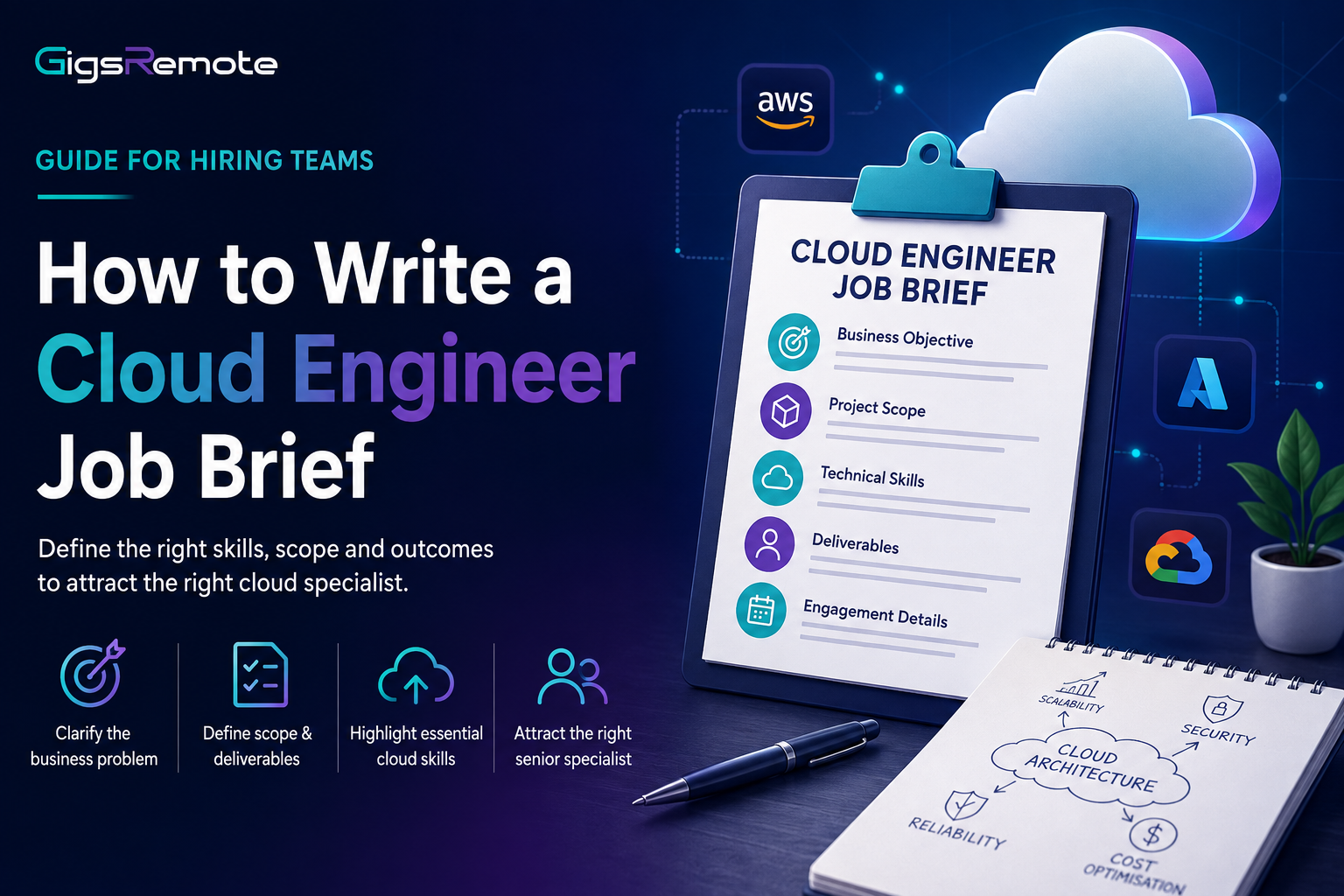
A strong DevOps brief should explain the current technical problem, existing infrastructure, expected deliverables, project timeline and required level of ownership.
Key Takeaway
A DevOps Engineer helps software teams deliver faster while improving reliability, security and scalability.
The role is especially valuable when manual processes, unstable infrastructure or limited internal expertise are slowing down delivery.
For defined projects such as cloud migrations, Kubernetes implementations, CI/CD automation or production stabilisation, a senior contractor can provide specialist expertise without unnecessary long-term commitment.
Right skills. Right time. Real results.

.png)
.png)